Reviews
Use Airbnb request two only with new evidence

Use your second Airbnb review removal request only when you can improve the evidence or the policy match. Airbnb currently limits the same received review to two removal requests and says a decision usually arrives within 48 hours. Repeating “the review is unfair” in stronger language spends the second request without changing the test.
Key takeaways
- There are currently two requests per received review. Treat the second as scarce.
- Read the rejection literally. Identify whether Airbnb found no violation, insufficient evidence, or a mismatch with the selected ground.
- Add something material. New evidence, complete context, or a clearer ground is stronger than a rewritten narrative.
- Omission of fact is not a standalone policy ground. Accuracy disputes and subjective opinions commonly remain online.
- Prepare for the review to stay. Draft the public response and operational fix at the same time.
What does Airbnb officially allow after a rejection?
Airbnb's current help article says you can submit a removal request for the same received review up to two times. It does not describe the second request as an unlimited appeal process. It is a second submission under the same Reviews Policy.
Airbnb says it usually emails its decision within 48 hours. If the review complies with policy, it stays. If it violates policy, Airbnb removes it and notifies the reviewer. The reviewer can contact Airbnb if they believe the decision was wrong, and Airbnb can update the outcome when new information changes the assessment.
Your second request needs a new reason to reconsider the case, not a louder version of the first request.
Why do fairness and accuracy arguments usually fail?
Airbnb lists several examples that do not automatically qualify for removal:
- Disagreement with the star rating.
- A review mentioning factors outside the host's control.
- Subjective opinions about the reservation.
Airbnb also says it generally does not mediate disputes about review accuracy. That means “the guest left out what I did for them” or “their version is misleading” is usually not enough on its own.
The HostRev vault contains an operator's unverified second-attempt tactic based on omission of fact. The outcome was not reported, and in a separate case two attempts still failed. Current official policy therefore has to control the advice: omission matters only when it helps prove a listed violation.
Examples:
- Omitted context does not automatically turn a subjective cleanliness opinion into removable content.
- A missing sentence may matter when the complete message thread proves the guest tied a review to a refund.
- A cropped review may matter when the full text publicly discloses private information.
- A missing report notice may matter when Airbnb's retaliation test requires proof the guest was notified of their policy violation.
How do you audit the first request?
Put the first submission and Airbnb's decision side by side. Mark each line as policy, fact, evidence, or emotion.
| Element | Question | Keep for request two? |
|---|---|---|
| Policy ground | Is it one Airbnb currently names? | Yes, if it still fits |
| Review quote | Does it show the alleged violation? | Yes, with exact wording |
| Reservation fact | Is it documented and relevant? | Yes |
| Evidence | Does it prove a required element? | Yes |
| Fairness argument | Does it only explain why the review feels wrong? | No |
| Revenue impact | Does it prove the policy violation? | Usually no |
| Character judgment | Does it help Airbnb verify anything? | No |
If nothing material remains after that edit, a second submission is unlikely to be stronger.
What counts as new evidence?
New evidence changes Airbnb's ability to verify a policy element. Examples include:
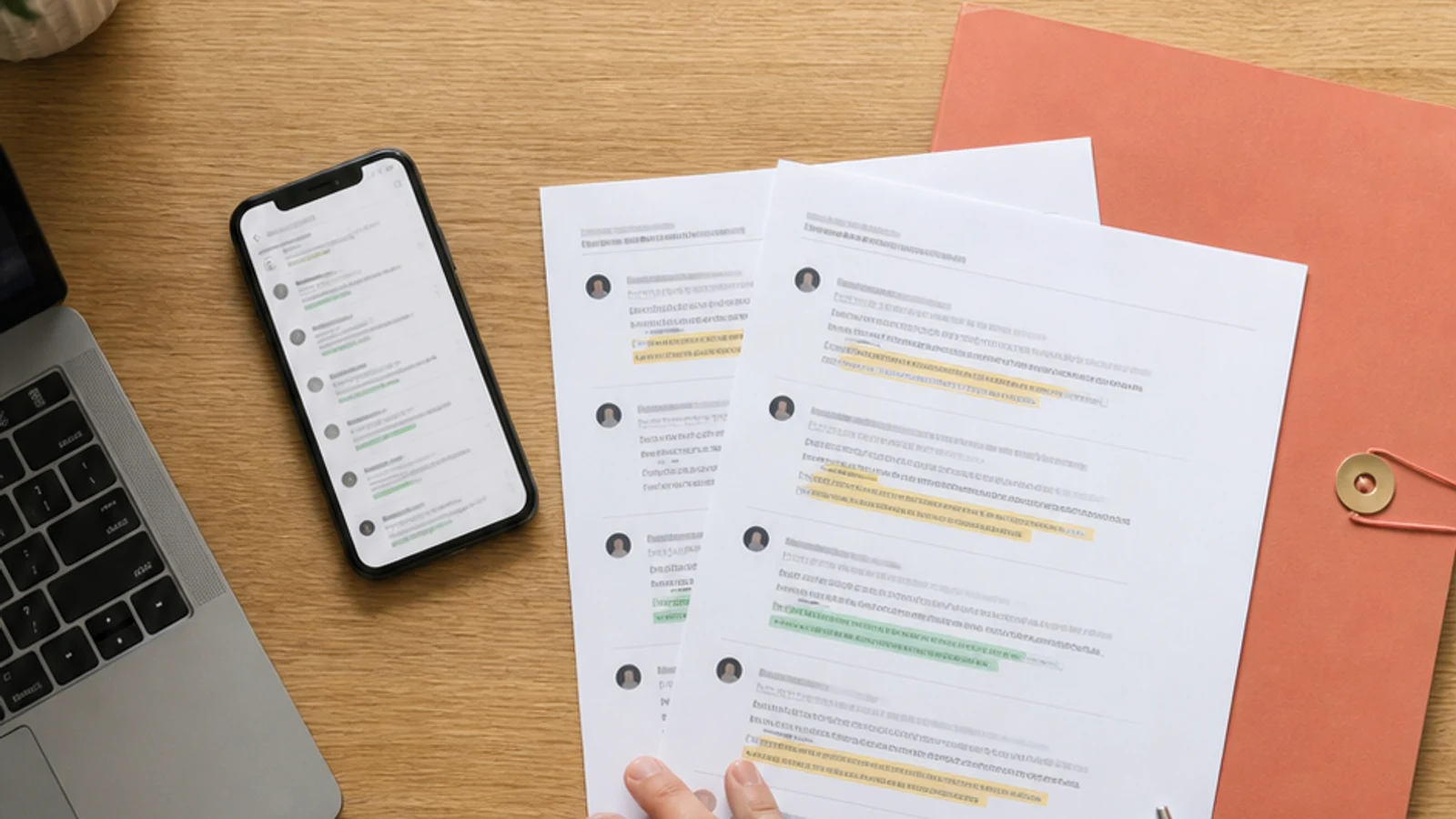
- The complete message exchange where the first request used one cropped screenshot.
- A reservation record confirming the guest cancelled or did not arrive.
- The report and notification trail needed for Airbnb's retaliation test.
- Public affiliation evidence showing the reviewer is a direct competitor.
- The exact Content Policy passage containing private information or prohibited content.
- A support transcript or case record that confirms a relevant event.
Evidence is not new because you converted it from PNG to PDF or added highlights. It is new when it adds a fact or context the first reviewer did not have.
Build the files with the Airbnb review removal evidence checklist before drafting the paragraph.
Should you change the removal ground?
Only when the first ground was genuinely wrong and the evidence clearly supports another current policy category. Do not rotate through grounds to see which one “sticks.” That looks less credible and can obscure the real issue.
Example:
- First request: “The guest's value opinion is false.” This is weak because subjective opinions commonly stay.
- Better second request, if documented: “The guest wrote that a refund would prevent the one-star review. The attached complete thread shows the requested value and the review pressure in consecutive messages.”
The second request is stronger because it changes from an accuracy dispute to documented review manipulation, not because the wording is more forceful.
What should the second request say?
Use this five-part structure:
I am submitting the second removal request for this review under “[current policy ground].” The first request did not include [specific missing evidence or context]. The review or message states “[short exact quote].” The attached [document] now shows [required policy fact]. Please reassess this review under the named ground using the complete evidence attached.
Then add a short evidence index. Do not include a full retelling of the stay unless Airbnb needs a specific fact to understand the document.
What if Airbnb says it is just the guest's opinion?
Take that as a signal that the first case was framed as an accuracy or fairness dispute. Ask one question: do you have evidence of a separate, written policy violation?
- If no, stop using the second request and prepare a calm public response.
- If yes, name that ground and show the evidence that was missing.
- If you are unsure, compare the facts against the current Reviews Policy rather than operator folklore.
For users in the European Economic Area, Airbnb also describes a separate internal appeal route for certain content moderation decisions, with a six-month submission period. That legal process is broader than the normal review removal form and depends on the type of decision and local rights. It is not a third routine removal request. Seek appropriate legal advice when the issue reaches that level.
What should you do while the second request is pending?
Prepare for both outcomes.
- Save the complete case record.
- Draft a brief public response that protects future guest trust.
- Fix any genuine operational issue the review exposed.
- Check the six category ratings for a repeated pattern.
- Do not pressure the reviewer or offer value in exchange for removal.
If the review stays, post the response for future guests, not as a final argument with the reviewer:
Thank you for the feedback. We are sorry the arrival process was not clear enough. We have replaced the access message with shorter step-by-step instructions and added a backup contact at the top. We appreciate the opportunity to improve it.
The wider system is in Airbnb reviews for hosts. The HostRev scorecard can show whether the listing has broader trust and conversion gaps around the review, but it does not influence Airbnb's removal decision or guarantee a result.
Frequently asked questions
Can I appeal a rejected Airbnb review removal request?
Airbnb currently allows up to two removal requests for the same received review. Treat the second as a limited new submission: identify the policy ground, address the first decision, and add new evidence or a materially clearer policy match.
How long does Airbnb take to review a removal request?
Airbnb says it usually emails a decision within 48 hours. A pending request may prevent another eligible person from submitting at the same time.
Is omission of fact enough to remove an Airbnb review?
Not by itself. Airbnb says it generally does not mediate accuracy disputes and that subjective opinions commonly remain. An omission matters only if the evidence also establishes a written policy violation, such as fake activity, extortion, qualifying retaliation, irrelevance, competition, or prohibited content.
What should I add to a second Airbnb review request?
Add evidence the first reviewer did not have, a clearer quote-to-policy mapping, complete context around a message, or documentation proving a required element of the selected ground. Do not simply rewrite the same fairness argument.
Sources
- Airbnb remove or dispute a review, accessed 11 August 2026.
- Airbnb Reviews Policy, accessed 11 August 2026.
- Airbnb content moderation appeals, accessed 11 August 2026.
- HostRev vault, 8 hours of Airbnb coaching (gb60mdCHKvw) and New Airbnb Glitch is DESTROYING Hosts (KD-PVtBsLHM), used as operator testimony with unverified outcomes.