Reviews
Build an Airbnb review removal evidence pack
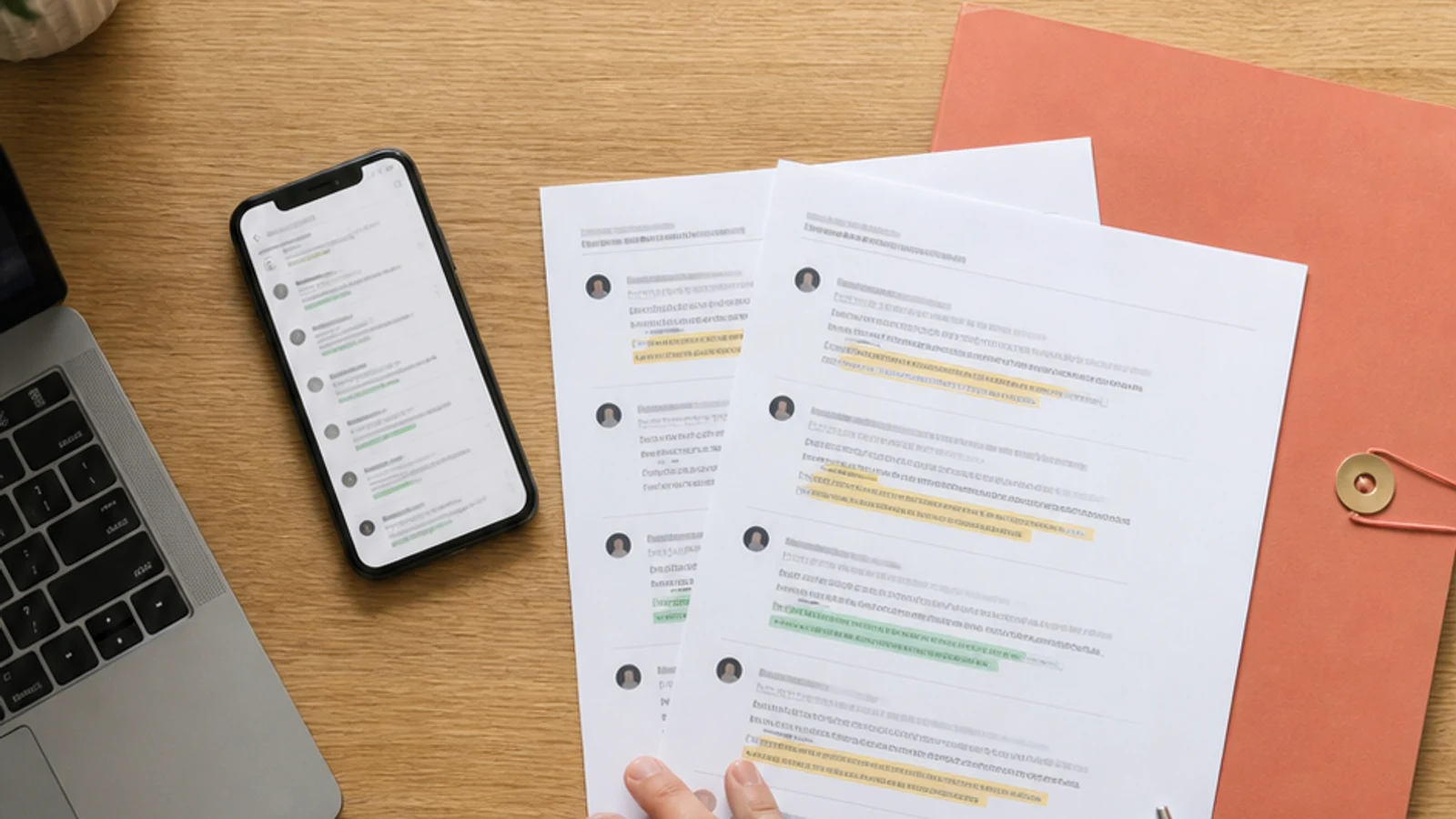
Build an Airbnb review removal request like an evidence file, not a complaint. Choose the current Reviews Policy ground that best fits the facts, quote the exact review or message, and attach only the records that prove that match. Airbnb says reviews are removed only in limited circumstances, so unfairness by itself is not the test.
This evidence workflow is one part of the wider Airbnb review management system, which also covers prevention, service recovery, rating diagnosis, and public responses.
Key takeaways
- Start with policy, not emotion. Name the written ground in the first sentence.
- Use first-party records. On-platform messages, reservation details, timestamps, listing disclosures, and support records are stronger than a long narrative.
- Keep the full context. A cropped sentence can look selective. Preserve the complete exchange and highlight the relevant line.
- Do not turn an accuracy dispute into a policy claim. Airbnb says subjective opinions and disagreements about ratings commonly stay online.
- Protect both attempts. Airbnb currently allows two removal requests for the same received review.
What is Airbnb actually deciding?
Airbnb is deciding whether the review violates its Reviews Policy or Content Policy. It is not deciding who behaved better, whether the rating feels proportional, or whether the guest omitted context.
The current Reviews Policy covers six broad areas:
- Irrelevant reviews or reviews without first-hand experience.
- Fake reviews not based on a real reservation.
- Bias, deception, extortion, incentivisation, or pressure.
- Retaliatory reviews that meet Airbnb's stated test.
- Reviews used to harm a direct competitor.
- Reviews that violate the Content Policy.
The complete overview lives in how to get a bad Airbnb review removed. This page has one narrower job: make the supporting evidence easy for a reviewer to verify.
A strong removal request lets the case handler verify one policy match without reconstructing the entire stay.
What evidence belongs with each removal ground?
Use this table before writing the request.
| Policy ground | Evidence to collect | Evidence that does not prove it |
|---|---|---|
| No first-hand experience or irrelevant | Cancellation timing, entry or smart-lock record, guest message saying they did not arrive, the exact irrelevant passage | A claim that the guest misunderstood the property |
| Fake review | Reservation record, account or affiliation evidence, messages showing the reviewer did not participate | Suspicion based only on harsh language |
| Extortion, incentive, or pressure | Complete on-platform exchange showing review leverage tied to money, a refund, discount, or other value | A refund request that never mentions a review |
| Retaliation | The underlying Airbnb policy violation, proof it was reported, proof the guest was notified, and the biased review that followed | A review complaining about a house rule by itself |
| Direct competition | Public ownership, employment, management, or listing affiliation showing direct competition | A reviewer who happens to host elsewhere |
| Content Policy violation | Exact prohibited words or information, plus a clear explanation of the privacy, harassment, impersonation, illegal, or other content rule involved | A rude but policy-compliant opinion |
Airbnb asks users not to upload sensitive personal information such as government IDs, health data, details about children, or criminal history in the removal form. Redact unrelated personal details before submitting.
How do you document extortion without creating it yourself?
Do not bait the guest into threatening a review. Do not offer money for silence. Do not ask them to restate a threat in more explicit words. Document only what they volunteer.
Airbnb's current policy prohibits threatening a negative review to obtain unwarranted compensation, and it prohibits providing or withholding a review in exchange for something of value. The important evidence is the link between the review and the requested value.
Strong example:
“Refund the cleaning fee and I will leave this out of my review. If you do not, I will give you one star.”
Weak example:
“The apartment was not clean. I want the cleaning fee refunded.”
The second may be difficult and expensive, but it does not itself show review manipulation. Keep the whole thread, including your neutral reply and any actions you offered.
What does Airbnb require for a retaliatory review?
The current policy is narrower than “the guest disliked a house rule.” Airbnb says a review is retaliatory only when the reviewer committed a policy violation, was notified of that violation, and then left a biased review because their violation was reported.
Your evidence pack therefore needs all three parts:
- The Airbnb policy violation, not merely a preference or custom house rule.
- The record showing it was reported and the guest was notified.
- The review and timing that connect the response to that report.
Airbnb explicitly says that a review discussing the facts or legitimacy of a Resolution Center or AirCover claim is not automatically retaliatory. Do not skip that distinction.
How do you prove a review was not based on first-hand experience?
Airbnb says a review can be irrelevant when it is not based on a participant's first-hand experience of the reservation. It also gives the example of a guest who never arrived or cancelled for reasons unrelated to the booked offering.
Useful records can include:
- A message in which the guest says they did not travel or enter.
- A cancellation timestamp before arrival.
- Access records showing no entry, used cautiously and with the reservation context.
- The part of the review discussing a separate service rather than the booked home.
Do not overclaim. A guest who entered briefly or encountered a check-in problem may still have first-hand experience. Present the facts and let Airbnb apply its policy.
How should you document a Content Policy violation?
Quote only the smallest relevant passage and name the exact content issue. Airbnb's Content Policy prohibits, among other things, content that is threatening, demeaning, insulting, harassing, discriminatory, illegal, impersonating, rights-infringing, or publicly discloses private information sufficient to identify a listing's location.
Use this structure:
The review states: “[exact short passage].” I am requesting review under Airbnb's Content Policy section on [private information / harassment / impersonation / other named ground]. The attached screenshot shows the published review and listing context. Please assess that specific passage under the named policy.
Do not repeat private information more than necessary. Redact it in any document where Airbnb can still understand the issue.
What should the submission paragraph say?
Keep it short enough to scan:
I am requesting removal under the Reviews Policy ground “[ground].” The review states “[short quote]”. The attached [message thread / reservation record / policy report] shows [one verifiable fact]. This directly relates to the policy because [one-sentence match]. Please review the attached evidence under that ground.
Then list the attachments in order:
01-review-screenshot.pdf02-message-thread.pdf03-reservation-record.pdf04-policy-report.pdf
Use descriptive names. A reviewer should know what each file proves before opening it.
What should you leave out?
- A history of every disagreement during the stay.
- Claims about lost revenue that do not prove the policy ground.
- Character judgments about the guest.
- Screenshots with missing dates or missing surrounding messages.
- A list of unrelated reasons you also dislike the review.
- Any fact you cannot document.
Operator Danny Rusteen's “one reason” approach in the HostRev vault is useful as a writing discipline, but it is not an Airbnb rule and does not guarantee removal. The official policy and your evidence decide the case.
What happens after submission?
Airbnb says it usually emails a decision within 48 hours. If the review complies with policy, it stays. If Airbnb removes it, the reviewer is notified and can provide new information. Airbnb may update the decision if that new information changes the assessment.
If the first request is denied, do not immediately resubmit the same file with a more forceful paragraph. Airbnb currently limits you to two removal requests for the same review. Use the second-request process to decide whether you have new evidence or a clearer policy match.
The HostRev review removal and appeal pack turns this process into a fill-in decision tree, evidence checklist, and submission template. It helps you prepare a clearer case, but it cannot guarantee Airbnb's decision. Use the HostRev scorecard to diagnose the listing and review signals around the dispute before deciding what deserves your attention next.
Frequently asked questions
What evidence should I submit to remove an Airbnb review?
Submit only evidence that proves the policy ground you selected: the complete on-platform message exchange for extortion, reservation and arrival records for irrelevance, the policy-violation notice and report trail for retaliation, or the exact private information or prohibited content for a Content Policy violation.
Should I give Airbnb several reasons to remove a review?
Lead with the single ground your evidence proves most clearly. A long fairness argument can hide the policy match. If a second ground is independently documented, keep it as a short secondary note rather than mixing several weak arguments together.
Does an inaccurate Airbnb review qualify for removal?
Not automatically. Airbnb says it generally does not mediate disputes about review accuracy, and subjective opinions do not qualify on their own. Inaccuracy matters when the evidence also establishes a listed policy violation such as fake activity, extortion, prohibited content, or qualifying retaliation.
How quickly does Airbnb decide a review removal request?
Airbnb says it usually emails its decision within 48 hours. A received review can be disputed at any time, and the current limit is two removal requests for the same review.
Sources
- Airbnb Reviews Policy, accessed 11 August 2026.
- Airbnb remove or dispute a review, accessed 11 August 2026.
- Airbnb Content Policy, accessed 11 August 2026.
- HostRev vault, How To Delete Airbnb Reviews: 7 Step Guide (9tauPokD4Hc), used as operator testimony and not as policy.