Reviews
How to get a bad Airbnb review removed

To get a bad Airbnb review removed, show how it violates Airbnb's current Reviews Policy or Content Policy. Airbnb says reviews are removed only in limited circumstances. A harsh opinion, an unfair-feeling score, or a complaint about something outside your control does not automatically qualify.
Key takeaways
- Unfair is not a policy ground. Start with Airbnb's current written rules.
- Current grounds are broader and more specific than three shortcuts. They include irrelevance, fake activity, manipulation, qualifying retaliation, competition, and prohibited content.
- Retaliation has a strict test. The guest must have violated an Airbnb policy, been notified, and then left a biased review because the violation was reported.
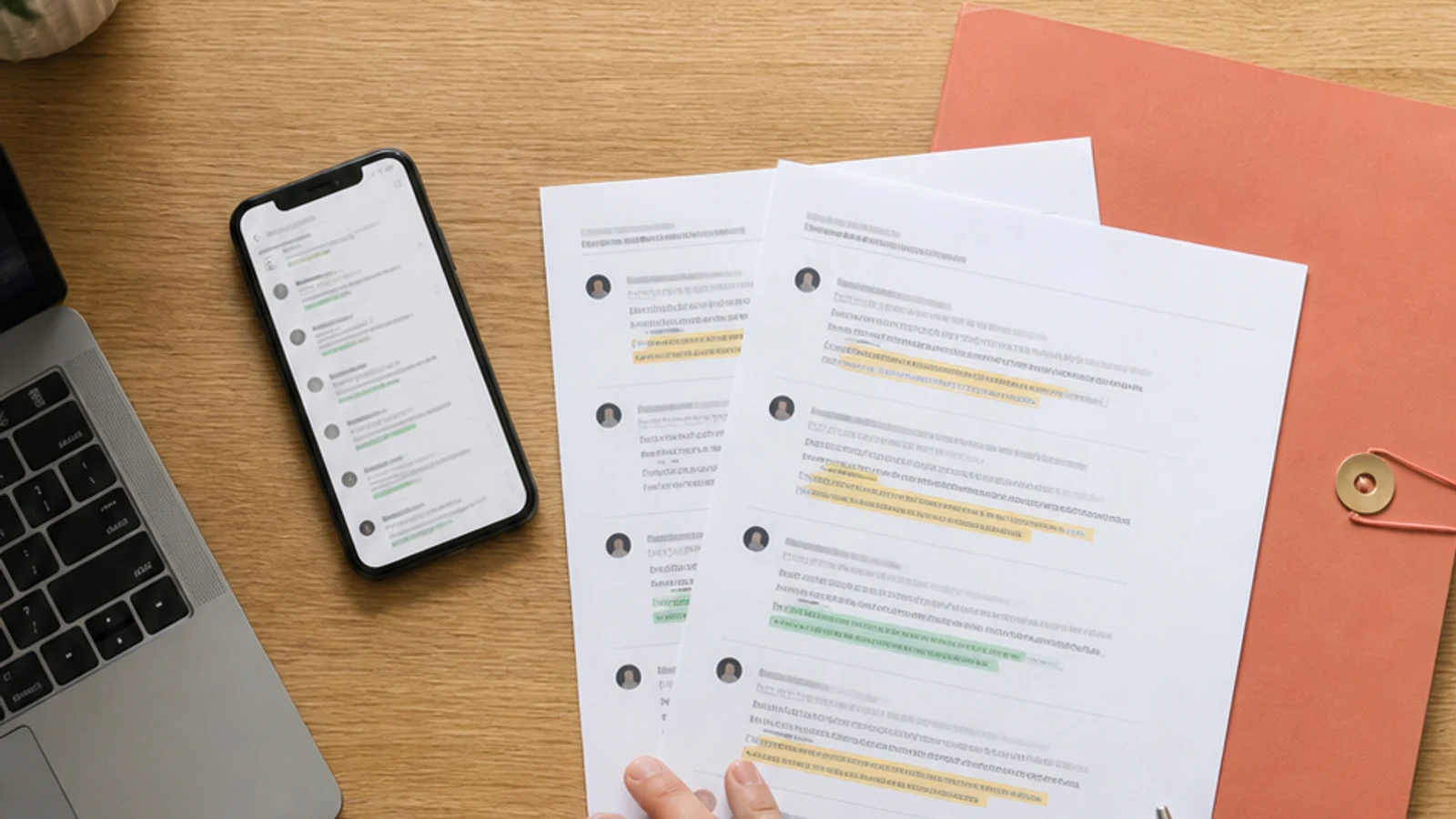
- Evidence should prove one match. Use the complete message, reservation record, report trail, or exact prohibited passage.
- You currently have two requests. Airbnb says it usually decides within 48 hours.
Can Airbnb actually remove a bad review?
Yes, when Airbnb decides that the review violates its Reviews Policy or Content Policy. A host, eligible co-host, team member, or booking guest can request review of a received review. Airbnb says a received review can be disputed at any time.
Airbnb also says consumer laws limit when online reviews may be removed. That is why the process is a policy assessment rather than a general fairness appeal.
The useful question is not “Was this review unfair?” It is “Which current policy ground do the facts and evidence establish?”
What are the current Airbnb review removal grounds?
Airbnb's policy currently describes these categories:
| Ground | What Airbnb's policy focuses on | Evidence to prepare |
|---|---|---|
| Irrelevant or no first-hand experience | The review is not about the booked offering or the reviewer did not experience the reservation | Cancellation, arrival, access, reservation, and exact review context |
| Fake review | The review is not based on a real reservation or participant | Reservation and affiliation records |
| Bias, deception, extortion, incentive, or pressure | Someone manipulated or pressured another person to influence a review | Complete on-platform message exchange |
| Retaliation | A guest violated an Airbnb policy, was notified, and reviewed in retaliation for the report | Violation, report, notification, review, and timeline |
| Direct competition | A host or guest reviewed a listing they are affiliated with or directly compete against | Public ownership, employment, or management evidence |
| Content Policy violation | The review contains prohibited content such as harassment, impersonation, illegal content, or private information | Exact passage and policy match |
Use the review removal evidence pack guide to build the supporting files for each ground.
What counts as review extortion or manipulation?
Airbnb prohibits threatening a negative review to obtain unwarranted compensation, a refund, or another incentive. It also prohibits providing or withholding a review in exchange for something of value, including a discount, refund, reciprocal positive review, or a promise not to take negative action.
The review pressure and requested value need to be connected. A guest asking for a refund after a real problem is not automatically extortion. A message that says “refund me or I will leave one star” is materially different.
Do not bait the guest into creating stronger language. Do not offer a refund in exchange for silence. Preserve what the guest volunteered, keep the full thread, and respond neutrally.
When is a review retaliatory?
Airbnb's current test is narrower than “the guest was angry about a rule.” It says a review is retaliatory only if:
- The reviewer committed a policy violation.
- The reviewer was notified of that violation.
- The reviewer then left a biased review because the violation was reported.
A dispute about a custom house rule or a Resolution Center claim does not automatically meet that test. The evidence needs to show each element.
When is a review irrelevant?
Airbnb says reviews should describe a first-hand experience of the offering reviewed. It gives examples such as a review about a separate service rather than the home, a participant who did not experience the reservation, or a guest who never arrived or cancelled for reasons unrelated to the booked offering.
Be precise. A guest who reached the property and encountered an access problem may still have first-hand experience. Submit the documented facts rather than an assumption about what should count.
Which Content Policy problems can qualify?
Airbnb's Content Policy applies to reviews and prohibits categories including threatening, demeaning, insulting or harassing content, discrimination, impersonation, illegal or harmful content, rights violations, and public disclosure of private information.
Quote the exact short passage and name the category. Avoid reproducing private information more than needed to identify the issue.
What usually does not qualify for removal?
Airbnb lists three common examples:
- You disagree with the star rating.
- The guest mentions something outside your control, such as neighbourhood noise.
- The review contains a subjective opinion, such as describing a room as cramped.
Airbnb also says it generally does not mediate disputes about review accuracy. A missing detail or a version of events you dislike does not become removable until it also establishes a listed policy violation.
How do you submit the request?
Airbnb's current desktop process asks you to:
- Start the removal-request flow.
- Select the review.
- Select the reason.
- Explain why it should be removed.
- Upload supporting documentation.
- Submit.
Airbnb advises searching with words from the review when locating it. It also asks users not to provide sensitive personal information such as government IDs, health data, details about children, or criminal history.
Use this paragraph structure:
I am requesting removal under “[policy ground].” The review or message states “[short quote].” The attached [record] shows [one relevant fact]. This matches the named policy because [one-sentence explanation]. Please assess the review under that ground.
Why should you lead with one reason?
Airbnb does not publish a “one reason” rule. It is a useful operator writing discipline from Danny Rusteen's removal guide in the HostRev vault. The point is to make the strongest documented match visible instead of burying it under a long list of grievances.
If two independent violations are both clearly evidenced, mention the second briefly. Do not turn seven weak fairness arguments into a larger weak case.
What happens after the request?
Airbnb says it usually emails a decision within 48 hours. If the review complies, it stays. If Airbnb removes it, the reviewer is notified and may provide new information. Airbnb can update the decision when that information changes the assessment.
The current limit is two removal requests for the same received review. If the first one is rejected, use the second review removal request process before spending the final attempt.
What if the review remains online?
Respond for future guests and fix any genuine operating failure. Keep the public reply calm, specific, and short:
Thank you for the feedback. We are sorry the arrival instructions were not clear enough. We have replaced them with a shorter step-by-step message and added a backup contact at the top. We appreciate the chance to improve the process.
Then check whether the review points to a repeated category problem. Read the six Airbnb review categories to separate a one-off complaint from a cleanliness, accuracy, check-in, communication, location, or value pattern.
The full prevention and recovery system is in Airbnb reviews for hosts. The HostRev review removal and appeal pack can help organise the decision tree, templates, and evidence checklist, but no template can guarantee Airbnb's decision. Use the HostRev scorecard to diagnose the controllable listing signals around the review pattern.
Frequently asked questions
Can you get a bad Airbnb review removed?
Sometimes. Airbnb may remove a review that violates its Reviews Policy or Content Policy. Current grounds include irrelevance or no first-hand experience, fake activity, review manipulation or extortion, qualifying retaliation, direct competition, and prohibited content. Unfairness alone is not enough.
What are valid reasons to remove an Airbnb review?
Airbnb's current policy covers irrelevant or non-first-hand reviews, fake reviews, bias or deception, extortion or incentives, qualifying retaliatory reviews, reviews used to harm direct competition, and reviews that violate the Content Policy. Each ground has its own facts and evidence requirements.
Can Airbnb remove a review because the star rating is unfair?
Not for that reason alone. Airbnb lists disagreement with a star rating, subjective opinions, and some comments about factors outside a host's control as common examples that do not automatically qualify for removal.
How many Airbnb review removal requests can I submit?
Airbnb currently allows up to two removal requests for the same received review and says it usually emails a decision within 48 hours. A received review can be disputed at any time.
Sources
- Airbnb Reviews Policy, accessed 11 August 2026.
- Airbnb remove or dispute a review, accessed 11 August 2026.
- Airbnb Content Policy, accessed 11 August 2026.
- HostRev vault, How To Delete Airbnb Reviews: 7 Step Guide (9tauPokD4Hc), used as operator testimony rather than policy.